By Rose Red
Why do we fight?
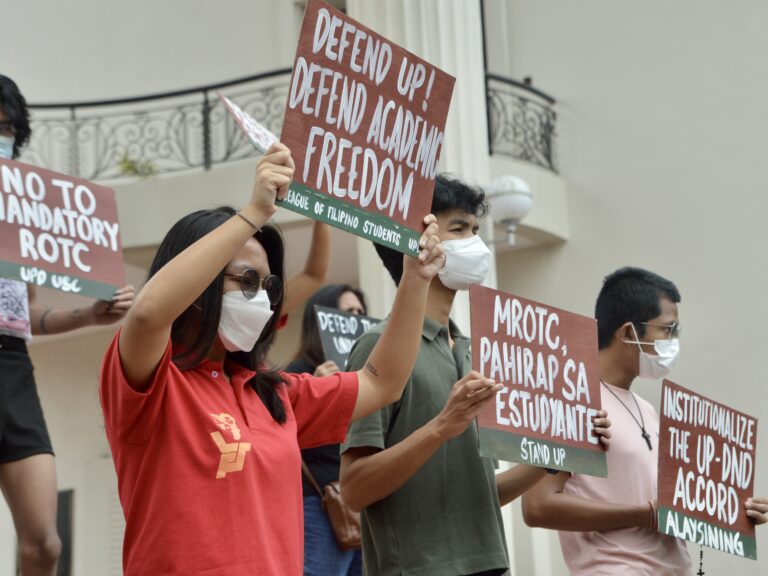
It’s a question I’ve often asked myself whenever I see yet another protest forming on the streets of campus and outside of it. Hundreds, sometimes thousands, of people raise up their signs and banners, calling out injustice and crying out for change. I hear them screaming out the speeches that sound like they’ve been simmering for decades. I hear their creative chants against the government’s crime and corruption. I hear the desperation, the despondence, and the deep-seated anger in their voices as they charge the streets. I look at all of these demonstrations – sometimes, in person, and mostly through a screen – and wonder why?
Why do we fight when all of it can be futile?
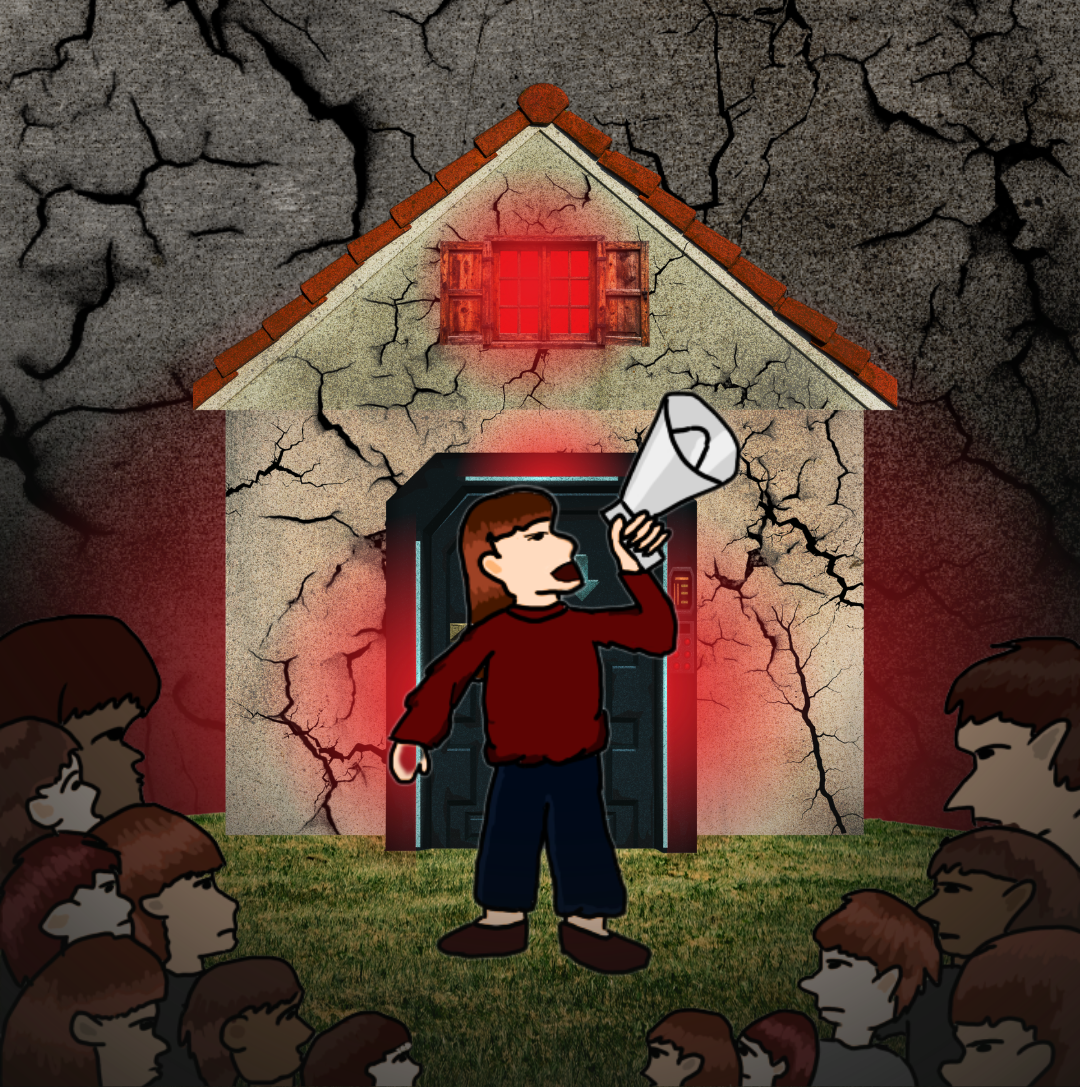
The reality of an activist – a Filipinoactivist – is one of interminable and, often, fruitless labor. Standing in front of the only well-secured door in a crumbling house, they make as much noise as they can, doing everything from screaming into a microphone to playing angry metal on one hundred different amplifiers, all in the hopes that the person on the other side, who can save that house, would finally take a hint and notice them. Everyone else gets bothered by how loud it has become – some of them are inspired to help, and most just complain. Eventually, the activist’s daily ritual becomes so normalized that no one bats an eye anymore, and they’re left standing in front of that door, wondering if the person on the other side can’t hear or, simply, refuses to listen. Still, they stubbornly carry on, and I’m left wondering why?
What’s the point of this war? When will this battle end? Why do we continue to fight?
For me, the answer is simple. We fight because it’s the only way to save that house.
Although I can easily say this now, it took quite a while for me to come to this realization. After all, for the longest time, I perceived activism as an endless labor of love, fueled primarily by hunger for change, thirst for justice, and relentless perseverance. Most don’t live long enough to reap the fruits of their efforts, and if they do, they live just long enough to see those efforts go to waste. I often wondered if that was how the original EDSA protestors felt. After all, the son of the very dictator they fought to oust got voted back into power. I wonder now if that’s how those who rallied against Duterte feel. His failed-to-be-impeached daughter announced her intentions to be a presidential candidate just recently. Mostly, I wonder if all this shouting is truly worth it when decades of it seem to fall upon deaf ears.
It’s sacrilegious to think of as a student of the very university that has garnered a reputation for being a center for student activism, but sometimes, I feel that there really isn’t a point. Within the gates of this campus, we are surrounded by a population of open-minded, outspoken, and opinionated individuals who aren’t afraid to call out injustice and clamor for change when necessary. It’s a melting pot of unique ideologies made stronger by the school’s policies on academic freedom and expression. Outside of it is a completely different story, and as someone who spent seventeen years being conditioned to develop an anti-political mindset, I believe I can paint a very good picture of it.
Outside of these gates, and even within them, are a multitude of people with completely different mindsets. There are groups of them who have survival so deeply ingrained in their mindsets that everything outside of getting three meals a day isn’t worth thinking about. To them, a politician who hands out blue bills during election season isn’t a manipulative vote-buyer but a kindly philanthropist. Some are too busy to do proper research on their candidates, relying solely on what they hear from word-of-mouth and from social media. To them, a politician’s family name, region of origin, and public reputation can make all the difference between a vote and an abstention. There are those who can rationalize everything their leaders do to the point that even the most grotesque and horrendous acts can be misconstrued as being done “for the greater good.” To them, innocent lives being taken as part of a war on drugs is necessary for the safety of the country. There are those who benefit from the corrupt acts of those seated in power. To them, evil can be justified if they earn enough from it, and protestors become nuisances that affect business. Then, of course, there are those who simply do not care or have become too jaded to care. To them, politics is something that can be ignored, demonstrations become just another trademark of life in the Philippines, and change is something that can never be achieved, so why bother trying? I admit, I was a victim of this mindset for most of my life. I’m still troubled by its remnants when doubt comes in.
For all these reasons and more, I believe that rallies never seem to garner as much support as they should. They happen too frequently, affect so little, and leave many people wondering whether all they really managed to achieve was causing more traffic on the already congested streets of the city. Recently, we celebrated the anniversary of a revolution that ousted an abusive, authoritarian government and became the face of “people power,” inspiring a generation of activists to fight against corruption and injustice, but as we look back at all the years since, it becomes harder to deny the fact that it failed to create any long-term change within the systems of our country’s politics. Political dynasties persist, party power relies solely on their members and patrons, a supposedly neutral military becomes an executive plaything, corruption is so common that a seemingly straight-laced politician would be met with “Weh? Di nga?”, and socio-economic issues such as poverty, lack of access to quality education, basic human rights, and more continue to plague our countrymen.
What’s the point?I keep wondering. What’s the point when nothing truly changes?
I must admit that for the longest time, my answer was that there was no point at all. Sure, there were rallies that brought about the changes they sought, like the EDSA revolution that gave us the 1987 constitution and the student rallies that legalized free tuition in state universities, but most were not as lucky with their results. Because of that, I couldn’t understand why people thought that rallying would work when the government responded by belittling and berating their participants. I couldn’t understand why students would want to put their lives in danger for the sake of causes that were so difficult to fight for. I even thought that one would have to be quite privileged to feel safe enough to take part in these demonstrations. Of course, I can now see just how wrong that mindset was, and to the questions I posed, I now have more concrete answers – proof that there is, indeed, a light at the end of the tunnel.
Some people fight because they have nothing left to lose. To them, rallies are a “weapon of the weak”, the only remaining means they have left to be seen, heard, and listened to because they have no privilege to do anything else. Some people fight to support the forsaken. They don’t need to be the ones affected by such injustices because they have enough empathy to want justice for those who suffered them. Some people fight to inspire others. A friend once told me that even if the protests never pierce through the walls of the ivory towers, they can still reach the common people and inspire them to take action against those hiding from their sins. Some people fight for the sake of their own emotions. Another friend once said that taking part in these demonstrations is an emotional experience – your feelings rise and fall with the crowd as you listen to decades’ worth of pain and anger finally being given an outlet. Some people fight, knowing full well that it might last a lifetime, because they believe that their goals will eventually be achieved. My fellow writers interviewed many people during a protest once and asked them for their thoughts on the EDSA People Power revolution. What stuck out to me was their belief that it was an ongoing battle and that as long as people are willing to fight, the possibilities for a better Philippines would never die. All of it was enough to spark a fire even within someone like me, who has yet to be part of such a mob, both because of constant doubt and persistent fear. It was enough to make even someone like me finally understand.
Why do we fight?
Because we live in a crumbling house that we are desperately trying to turn into a strong nation. Because the one well-maintained room that holds our leaders is hidden behind a secured door. Because while there is no guarantee that all this noise would reach them, that all this rallying would actually bring about the change that we as a people have long desired, staying silent will only serve to expedite the destruction of that house.
Why do I fight?
Because I’m tired of staying on the sidelines, of complaining while doing nothing, of faking courage while remaining complicit. Today, I finally take my stand in the hopes that I might inspire others to let go of the cynicism that I once firmly held onto and to help in breaking down that door.