Class, Control, and the Quiet Violence of Belonging in BGC
written by Cyrenne Serano
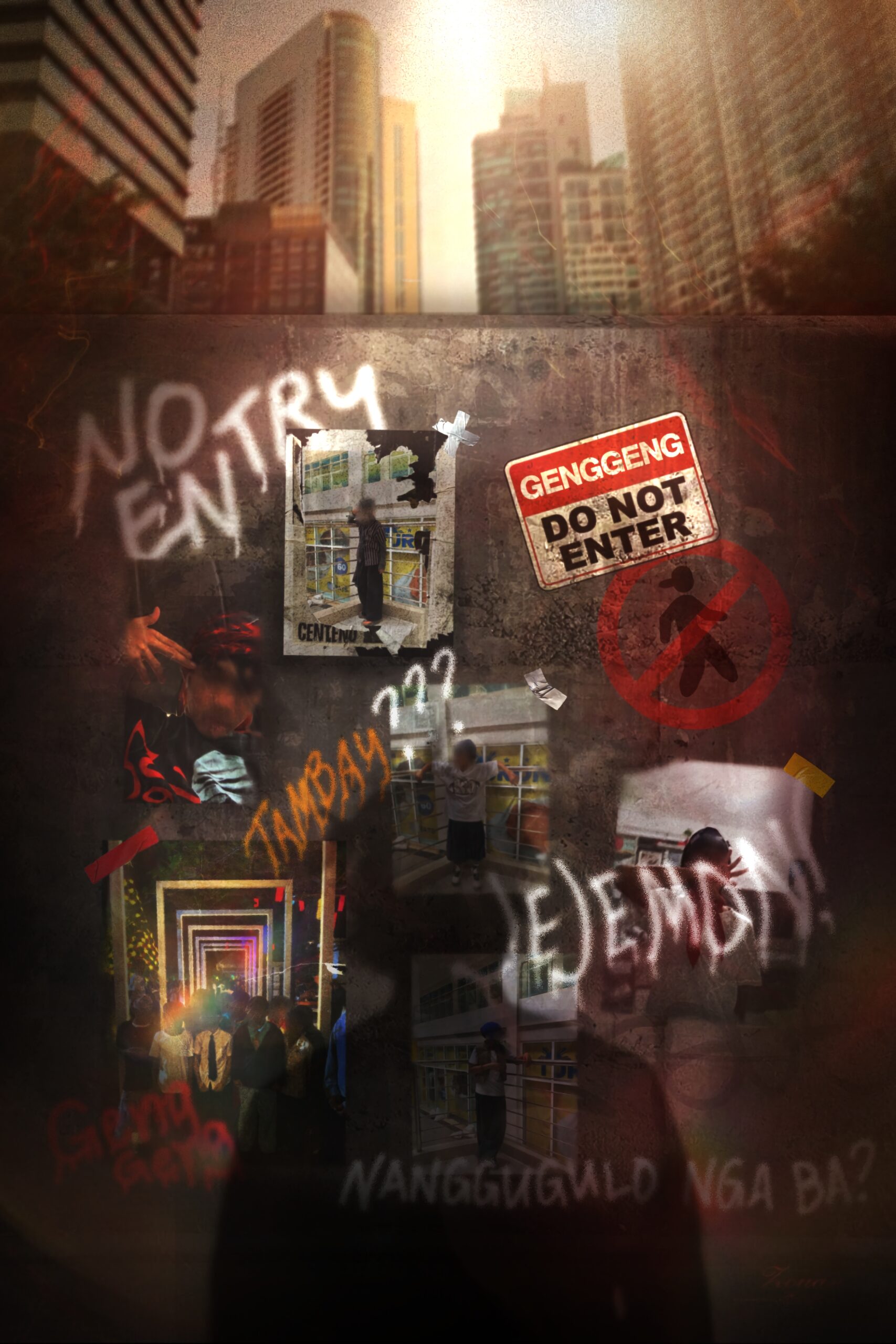
In recent weeks, videos circulating on social media have reignited a familiar debate about Bonifacio Global City. In one clip, groups of teenagers dressed in loose streetwear were seen being monitored by security guards and, in some cases, were chased out of certain areas of the district.
The scenes quickly triggered online arguments. Some defended the enforcement as necessary to maintain order. Others questioned why certain groups seemed to attract scrutiny simply for gathering in public. The incident may seem minor, even mundane. But it exposes a deeper tension embedded in how and for whom the city was built.
Bonifacio Global City markets itself as the future: clean sidewalks, curated parks, glass towers, and the promise of safety. It is pedestrian-friendly, Instagram-ready, and proudly “world-class.” But beneath the polish lies a simple truth we rarely interrogate: it is not truly public. It is a privately managed space performing as a city.
That distinction matters.
Because when a space is privately governed yet publicly consumed, access becomes conditional. Security enforcement becomes discretionary. Rules become flexible depending on who you are, how you dress, and whether you fit the brand.
You are allowed to enter. But belonging is never guaranteed.
BGC is less a city than a lifestyle product. And like any lifestyle product, it must protect its image.
The Illusion of Public Space
BGC feels open — wide sidewalks, public art, benches where people can sit and linger. But try getting there without a car.
While jeepneys and buses do enter Bonifacio Global City, circulation within the district remains carefully structured. Movement is funneled through branded transport systems and car-centric roads, reinforcing the sense that access is permitted — but strictly managed. If mobility is a prerequisite to access, and mobility requires money, then the space is already filtered before you even arrive.
The same logic extends to consumption. Walk along High Street and count the options. Aside from a handful of fast food chains, the district is dominated by upscale restaurants and boutique cafés. The price of a casual hangout can quietly become exclusionary.
None of this is accidental. Infrastructure determines who can casually occupy space. When affordability is scarce and transit is controlled, the city selects its audience. Here, presence is aesthetic. And once presence becomes aesthetic, it becomes subject to judgment.
A public park does not ask if you match the aesthetic. A lifestyle district does.
Safety as a Language of Class
Recent online discussions and viral videos have shown groups of teenagers being monitored or asked to leave certain areas in BGC, reigniting debates about whether enforcement targets behavior — or appearance. These incidents raise deeper questions about who is allowed to comfortably occupy so-called public space.
Let’s be clear: safety matters. No one is arguing against secure urban spaces. But we need to ask what we mean when we say “safety.” In privately managed districts like BGC, maintaining a particular atmosphere is not just aesthetic preference — it is also an economic strategy. Brand image, property value, and investor confidence depend on controlling how the space looks and feels. In that structure, enforcement is not only about rules; it becomes about protecting a curated environment.
Why does streetwear signal danger?
Why do large groups of young Filipinos trigger discomfort?
Why does suspicion so often follow aesthetics rather than actions?
When enforcement shifts from behavior-based to optics-based, it ceases to be neutral. When security guards monitor oversized shirts, colorful bandanas, loose jorts, loud laughter, or congregating teenagers more closely than actual misconduct, we are no longer talking about law enforcement.
We are talking about aesthetic governance — the regulation of who looks like they belong.
Once belonging is judged visually, it shapes who can linger, gather, or move freely within a space. Space itself is not neutral. Through design, regulation, and infrastructure, environments that appear open also quietly shape who can linger comfortably. Belonging is structured by the space itself.
Streetwear has long been politicized. Globally, it draws heavily from Black and Latino cultural traditions — communities historically surveilled and criminalized. Oversized silhouettes, sneakers, caps, and hip-hop influences have repeatedly been framed as deviant rather than expressive. The politics of style has always been entangled with race and class.
So when Filipino youths in streetwear are treated as potential threats, it is not just about fashion. It reflects a broader pattern of equating marginalized aesthetics with disorder. Some argue that stricter enforcement is necessary to maintain safety and protect businesses. But enforcement becomes ethically questionable when it disproportionately monitors certain bodies while leaving similar behaviors by more affluent-looking groups largely unexamined.
To be fair, there have also been reports of some youths gathering in BGC to confront or fight each other. When actual violence occurs, intervention is indeed necessary. But the reaction often extends beyond those specific incidents. Instead of focusing only on individuals involved in misconduct, suspicion begins to attach to anyone who looks like they belong to the same group.
When suspicion follows appearance rather than conduct, regulation stops being about security and begins reflecting social hierarchy. “Safety” becomes a coded language that sounds neutral but often disguises class anxiety.
The Politics of the “Geng Geng” Label
The label itself is revealing.
“Geng geng” compresses a diverse group of young people into a caricature: loud, unruly, disruptive. It turns style into pathology. It transforms youthful presence into suspicion.
We have seen this before.
“Tambay.”
“Jejemon.”
Now “geng geng.”
Each generation produces labels that function as tools of social sorting.
In the Filipino context, these names reflect a long-standing pattern of class-based judgment — a form of elitism rooted in cultural norms that equate respectability with middle- and upper-class aesthetics. Labeling certain Filipino youth as “problematic” or “undesirable” becomes a way of reinforcing boundaries around who is seen as proper in public space.
These labels do not simply describe behavior; they shape perception. They justify increased scrutiny. They reassure the middle class that their discomfort is rational. For many middle-class observers, respectability becomes a way of signaling status. The way someone dresses, speaks, and behaves becomes a way of signaling distance from poverty while aspiring to elite standards.
Aesthetic cues like clothing and style are often interpreted not just as personal expression but as markers of class position. When youth styles associated with lower-income communities appear in elite or semi-elite spaces, they disrupt the – quiet yet embedded – social hierarchy these places are designed to maintain.
This dynamic becomes clearer when we compare how different youth aesthetics are received in the same space. Consider the now-familiar figure of the “BGC girl” — athleisure, curated coffee in hand, minimalist outfit, effortlessly blending into the polished environment. Her presence is read as aspirational, even desirable.
Both she and the “geng geng” youth are young.
Both are expressive.
Both occupy the same sidewalks.
But only one aesthetic is read as safe.The difference is not morality. It is class coding.
The “BGC girl” signals purchasing power. The “geng geng” youth signals unpredictability in a space designed for controlled consumption. One fits the brand. The other disrupts it.
Who Gets to Linger?
Cities are not just economic engines. They are theaters of visibility.
To linger in a space is to claim belonging. To be asked to leave—explicitly or subtly—is to be told you are out of place.
Elite urban spaces prioritize comfort for the affluent. Surveillance often intensifies when bodies do not match the curated atmosphere. Polished aesthetics are equated with safety; unfamiliar ones with threat. What appears to be neutral security practice is often a subtle form of social sorting, where visibility itself becomes grounds for suspicion.
So we must ask:
Whose comfort matters?
Whose presence triggers security?
Who is allowed to gather without being read as suspicious?
The discomfort surrounding so-called “geng geng” groups is rarely about crime statistics. It is about the unsettling presence of those who disrupt “sanitized” urban aesthetics. What unsettles observers is not necessarily misconduct, but the visibility of class difference in spaces designed to appear socially uniform.
Urban comfort is rarely universal. It is selectively produced. Spaces marketed as “clean,” “orderly,” or “safe” are often designed to minimize the visibility of those who do not fit the social image they wish to project. Ironically, BGC itself sits beside long-standing urban poor communities — a reminder that the polished district does not exist apart from inequality, but within it.
The city is not protecting order. It is protecting class dominance. Security becomes the language through which inequality is quietly enforced, ensuring that certain bodies move freely while others are reminded—subtly but persistently—that they do not belong.
The City at the Margins
The story of Bonifacio Global City does not end at its polished sidewalks.
Just beyond the district’s towers and curated parks lie communities where many of the city’s service workers actually live. Many of the people who clean the sidewalks, staff the restaurants, guard the buildings, and maintain the offices return every evening to neighborhoods outside the glossy narrative of the “world-class” city.
In this sense, BGC is sustained by a workforce that largely cannot afford to live within it.
Urban development often hides this relationship. The gleaming image of the district suggests a self-contained world of order and prosperity. But behind the curated urban landscape lies a network of labor drawn from surrounding communities that have long existed beside the district. Communities that have long sustained it.
This contradiction becomes visible in the discomfort surrounding groups labeled as “geng geng.”
Many of these teenagers are not strangers to the district’s urban ecosystem. Some come from nearby communities. Some are the younger siblings or neighbors of the workers who keep BGC functioning every day.
Their presence collapses a boundary the district tries to maintain: the separation between the polished center and the laboring margins that sustain it.
When these youths gather in BGC, what unsettles observers is not simply noise or crowding. It is the sudden visibility of the very communities elite spaces often try to keep at a distance. The same social groups treated as suspicious when they linger in BGC are often the ones whose labor keeps the district running every day.
The truth is hard to ignore. It cannot be concealed by the illusion of development. The city’s gleaming towers and spotless sidewalks do not sustain themselves. They are carried, quietly and persistently, on the shoulders of those who live just outside its borders.
Elitism in Plain Sight
Let’s call it what it is.
When access depends on money, when style determines scrutiny, when youth from less affluent backgrounds are treated as intrusions rather than citizens, that is elitism.
And it is blatant.
A truly inclusive city does not demand polish from its citizens before allowing them to exist. It does not confuse poverty with danger. It does not equate aesthetic difference with risk.
If safety becomes a mask for aesthetic preference, then what we are protecting is not order—but comfort for the already comfortable. The real disorder is not a group of teenagers in oversized shirts and sneakers. The real disorder is a city that mistakes exclusion for excellence and calls it security.
If your version of order requires pushing the poor out of sight, then what you’ve built isn’t a city — it’s a showroom.